
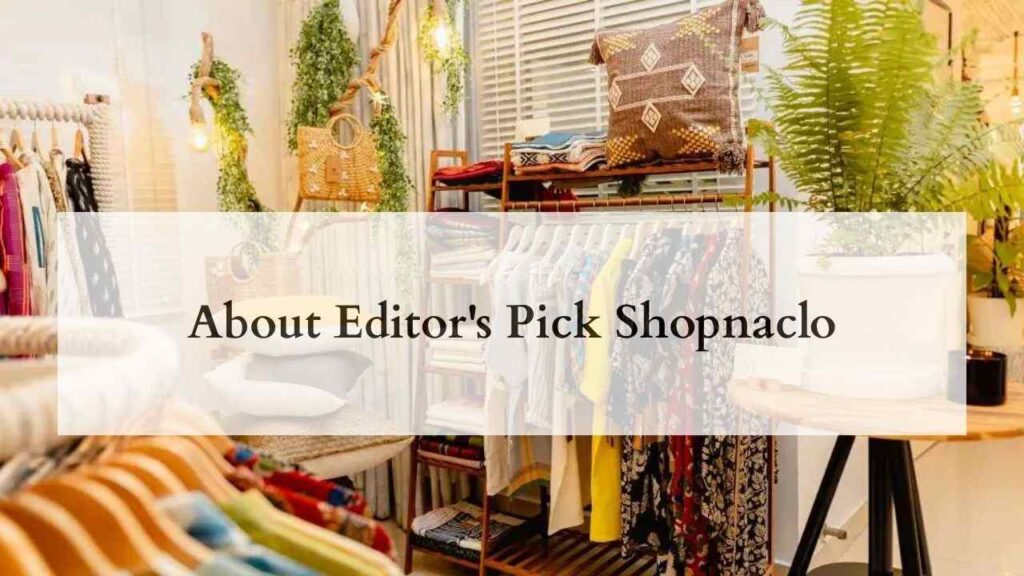
If you’ve recently come across the phrase editor’s pick shopnaclo, you’re probably wondering what it actually represents. Is it a product category? A curated collection? A brand endorsement? Or simply a marketing phrase designed to grab attention?
The answer isn’t overly complicated — but it’s more nuanced than it first appears.
At its core, this phrase combines two powerful ideas: editorial curation and selective shopping guidance. When used together, they suggest that a group of items, products, or content pieces have been hand-selected for quality, relevance, or uniqueness. Instead of endless scrolling and guesswork, you’re being shown what’s considered the “best of the best.”
Let’s unpack what that really means — and whether it’s worth your attention.
What “Editor’s Pick” Typically Signals
Across digital platforms, “editor’s pick” usually implies:
- Human-curated selections
- Items chosen for quality, trend relevance, or reliability
- A filtered experience to reduce overwhelm
- Recommendations based on taste or expertise
It’s different from algorithm-driven suggestions. Instead of showing what’s simply popular or heavily clicked, editorial picks aim to highlight what stands out for deeper reasons — craftsmanship, value, innovation, or design appeal.
When attached to Shopnaclo, the phrase suggests a curated showcase under that identity or theme.
So, What Is Shopnaclo?
The name “Shopnaclo” appears in various online contexts, often connected to curated collections, product roundups, or lifestyle selections. Rather than representing one massive global brand, it’s more commonly associated with a curated shopping or content concept.
In many cases, it’s presented as:
- A digital storefront experience
- A curated product showcase
- A lifestyle-oriented selection hub
- A themed recommendation platform
Because of this flexible usage, editor’s pick shopnaclo is less about one fixed company and more about the experience of curated discovery.
Why Curated Picks Matter in Today’s Online World
We live in a time of unlimited choice. That sounds great in theory — but in practice, it often leads to decision fatigue.
Imagine searching for a simple home décor item. You open a marketplace and see 4,000 results. You filter by price. Then by ratings. Then by color. Forty minutes later, you’re overwhelmed and unsure.
Now picture landing on a page featuring 12 carefully chosen items labeled as standout selections. Each product includes a short explanation of why it made the cut. Suddenly, shopping feels manageable again.
That’s the real value behind curated picks.
A Busy Professional Shopping Online
Let’s say Ayesha, a full-time professional, needs to upgrade her workspace at home. She doesn’t have hours to research desk accessories, lighting, and organizers. When she finds a curated “editor’s choice” collection under Shopnaclo, she quickly reviews a shortlist of recommended items — each chosen for practicality and design balance.
Instead of juggling dozens of browser tabs, she narrows her decision in minutes.
That’s the quiet power of smart curation.
Editor’s Pick vs Standard Listings
To understand the difference clearly, here’s a simple comparison:
| Feature | Standard Marketplace Listing | Editor’s Pick Shopnaclo |
|---|---|---|
| Selection Method | Algorithm-based or paid placement | Human-curated |
| Number of Options | Hundreds or thousands | Limited and refined |
| Research Time Required | High | Lower |
| Emphasis | Popularity & volume | Quality & relevance |
| Decision Confidence | Moderate | Typically higher |
| Experience | Overwhelming at times | Focused and guided |
This distinction explains why curated experiences are becoming more attractive to modern consumers.
Is It Always Trustworthy?
Here’s where critical thinking matters.
While editorial selections can reflect expertise, not every page using the phrase guarantees deep research or strict standards. Sometimes it’s genuinely curated. Other times, it’s a branding technique.
To evaluate credibility, consider:
- Are there clear reasons explaining why items were chosen?
- Is the content detailed or generic?
- Are there real reviews or user feedback?
- Does the platform feel transparent?
The label alone shouldn’t replace your judgment — but it can be a helpful starting point.
The Psychology Behind Curated Shopping
There’s a deeper reason curated picks work so well.
Humans naturally look for guidance when faced with too many options. When someone (an editor, stylist, or curator) filters choices for us, it reduces cognitive load. We feel reassured. It builds subtle trust.
Interestingly, even knowing that someone else narrowed the field makes us feel more confident in our final decision.
I once spent nearly two hours comparing similar tech accessories before realizing I was stuck in analysis paralysis — and the moment I switched to a curated recommendation list, my decision became effortless.
That shift from chaos to clarity is exactly what curated labels aim to create.
Why “Editor’s Pick Shopnaclo” Is Gaining Search Interest
Search behavior often reflects curiosity. When people type in phrases like this, they’re typically trying to:
- Understand if it’s a brand
- Verify legitimacy
- Discover curated deals
- Find trusted recommendations
- Explore trending selections
The phrase stands at the intersection of shopping and editorial authority — which makes it naturally intriguing.
As online consumers become more selective and time-conscious, curated shopping models are likely to expand further.
How to Make the Most of Curated Collections
If you encounter an editor’s pick section under Shopnaclo or any similar platform, here’s how to use it wisely:
- Treat it as a starting point, not the final word.
- Compare at least two options before deciding.
- Check specifications and compatibility.
- Look for user reviews where available.
- Prioritize your personal needs over trends.
Curated doesn’t mean universal. What’s ideal for one shopper might not suit another.
The Bigger Trend: From Endless Choice to Smart Filtering
The rise of curated models reflects a broader shift in online commerce. Instead of celebrating unlimited options, many platforms now focus on intelligent filtering.
People want:
- Time efficiency
- Reduced stress
- Quality over quantity
- Trusted guidance
The phrase “editor’s pick shopnaclo” captures that evolution in a compact form. It signals selectivity. It suggests intentionality. And most importantly, it implies that someone has already done part of the work for you.
Also Read: Understanding 73deb40: Key Uses & Benefits Explained
Conclusion
So what does editor’s pick shopnaclo really mean?
It represents a curated selection approach tied to the Shopnaclo concept — emphasizing refined choices over overwhelming quantity. While it doesn’t refer to one single globally recognized brand, it symbolizes a style of guided discovery that many modern consumers appreciate.
When used thoughtfully, it can save time, reduce stress, and improve decision confidence. When used carelessly, it’s just another marketing phrase.
The key lies in understanding the context, evaluating credibility, and using curated recommendations as helpful tools — not automatic guarantees.
In a world overflowing with options, sometimes the smartest move isn’t searching more — it’s choosing better.
FAQs
1. Is editor’s pick shopnaclo a registered brand?
It does not appear to represent one universally recognized brand. It’s more commonly used as a curated selection label tied to the Shopnaclo concept.
2. Does “editor’s pick” guarantee quality?
Not automatically. It suggests curation, but you should still review product details and user feedback before purchasing.
3. Why are curated shopping lists popular?
They reduce decision fatigue, save time, and help shoppers focus on refined options instead of endless listings.
4. How is this different from trending products?
Trending products are based on popularity or engagement data, while editorial picks imply human judgment and selective evaluation.
5. Should I rely only on curated picks when shopping?
Use them as guidance, but always confirm details based on your personal needs and budget.