
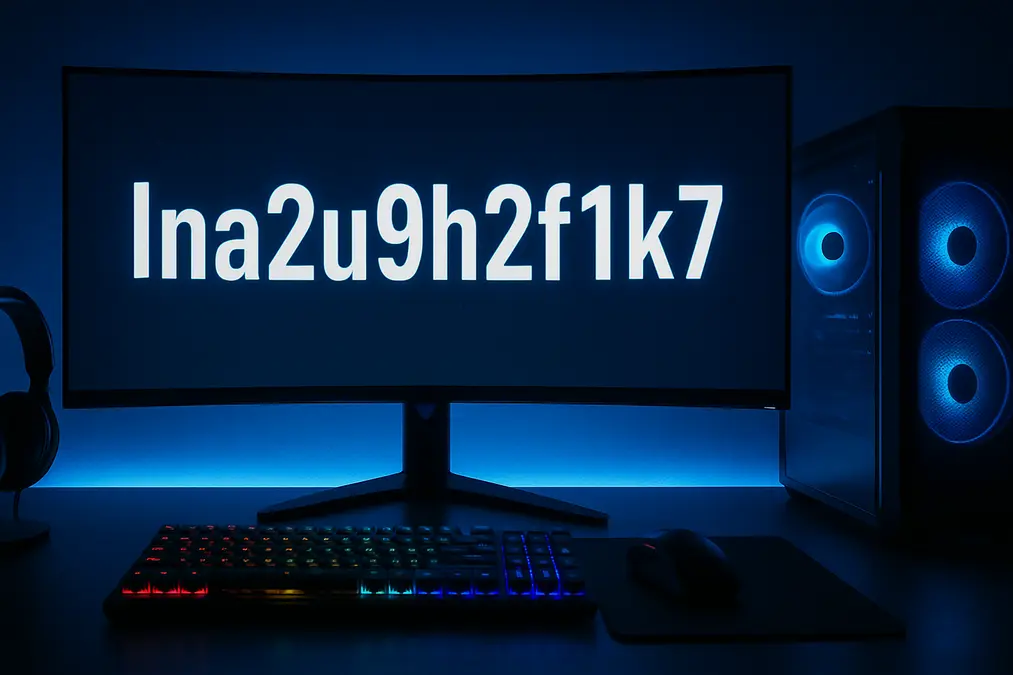
At first glance, lna2u9h2f1k7 looks like a random string smashed across a keyboard. No vowels dancing together, no dictionary roots, just a mix of letters and numbers. But in the digital world, combinations like this are far from meaningless. They quietly power systems we use every day — logins, security layers, tracking processes, and background operations most users never see.
Short alphanumeric strings like this are often system-generated identifiers. They may function as session tokens, verification keys, tracking IDs, or temporary authentication strings. While they look chaotic, their randomness is actually the feature, not a bug.
Why Codes Like This Exist
Modern platforms run on automation. Systems need unique markers to distinguish one action, user, or request from another. Instead of human-friendly names, machines prefer structured randomness.
Strings similar to this commonly serve as:
- Account verification identifiers
- Password reset tokens
- Secure session markers
- Database reference IDs
- API request keys
- Tracking parameters
The randomness helps prevent guessing, duplication, and security breaches. A predictable code is easy to exploit. A complex one? Much safer.
Use Case Example for lna2u9h2f1k7
Imagine signing into a platform and requesting a password reset. You receive an email with a link. Hidden inside that link is a string like this one. It acts as a temporary digital handshake between your browser and the server. Without it, the system wouldn’t know the request is truly yours.
The code expires after use, reducing risk. That invisible string is doing the heavy lifting while you simply click a button.
How These Strings Are Generated
They’re usually created using algorithms that combine:
- Random number generation
- Time-based components
- Encryption methods
- User or session variables
The goal is uniqueness. Even two users performing the same action at the same time will receive different strings.
I once tested a login system during a staging review and noticed that every refresh produced a brand-new token — that’s when it clicked how dynamic and short-lived these identifiers really are.
Where You Might Encounter Them
You’ve likely seen similar strings without realizing it. Common places include:
- Website URLs after logging in
- Confirmation links in emails
- Cloud storage file sharing links
- API integrations
- Online forms after submission
- Payment gateway redirects
They are the glue holding digital interactions together, though rarely explained to end users.
Comparison: Human-Friendly vs System Codes
| Feature | Human-Readable Labels | System-Generated Codes |
|---|---|---|
| Easy to remember | Yes | No |
| Secure against guessing | Low | High |
| Used for backend systems | Rarely | Frequently |
| Good for public display | Yes | No |
| Ideal for authentication | Weak | Strong |
This is why platforms avoid simple names for security functions. Randomized structures reduce vulnerabilities dramatically.
Security Considerations
Even though these strings are protective tools, users should handle them carefully.
Best practices include:
- Never sharing reset links publicly
- Avoid posting screenshots containing URLs
- Treating verification emails as sensitive
- Logging out of shared devices
If such a string is exposed, it may allow unauthorized access — especially if it hasn’t expired yet.
Why They Look So Strange
Humans prefer patterns. Machines prefer unpredictability. That’s the core difference.
The mixture of lowercase letters and numbers is intentional. It increases possible combinations, which strengthens security. For example, a 10-character code using only numbers has far fewer possibilities than one mixing letters and digits.
The “ugliness” is actually digital armor.
Are They Dangerous?
By themselves, no. They’re just identifiers. The risk comes from misuse — like sharing a password reset link or exposing a session token in public forums.
When handled properly, they protect users more than they threaten them.
How Long Do They Last?
It depends on purpose:
- Login session tokens: minutes to hours
- Password reset links: usually under 24 hours
- Verification codes: single use
- API keys: until revoked
Temporary lifespan limits damage if exposed.
Why This Matters More Than People Think
Most users never question the strings in their URLs. But understanding them builds digital awareness. You begin recognizing the difference between harmless page links and sensitive authentication links.
That awareness reduces phishing risks, accidental data leaks, and security mistakes — small knowledge, big protection.
Also Read: Smart Guide to Buy Vezgieclaptezims Bankroll
Conclusion
What seems like random chaos is actually structured security. Strings like lna2u9h2f1k7 represent the invisible mechanics behind modern digital systems. They identify, verify, secure, and track — quietly, efficiently, and constantly.
Recognizing their purpose transforms confusion into clarity. Instead of ignoring them, you’ll know when to treat them as routine system behavior and when to handle them with caution.
FAQs
What does this code specifically stand for?
It’s usually a system-generated identifier rather than a word or abbreviation.
Can I delete it from a URL?
If it’s part of authentication or verification, removing it may break the link.
Is it a password?
Not exactly. It often acts as a temporary access key.
Should I share links containing such strings?
Only if you’re sure the link doesn’t grant private access.
Why don’t websites use readable words instead?
Predictable words are easier to guess and exploit. Random strings improve security.